
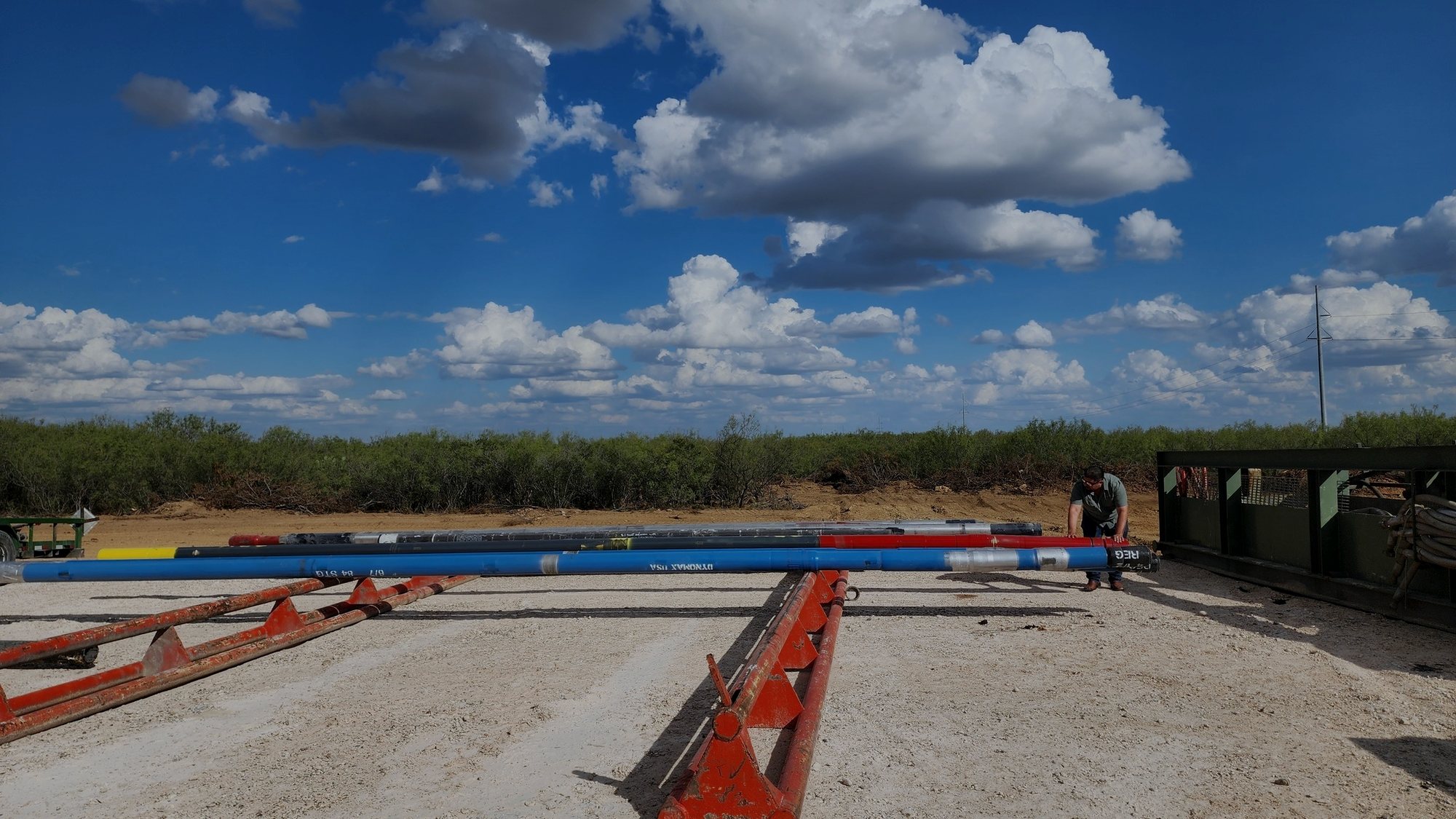
Non-productive time is any rig hour that does not move the wellbore toward TD: unplanned trips, stuck pipe, motor stalls, survey delays, fluid losses, and waiting on decisions. The operators who bring it down code every lost hour to a root cause, watch downhole data for early warnings, run tools that stay in the hole, and plan out the trip triggers before spud.
The costly NPT rarely shows up on the morning report first. It starts downhole as a slow torque climb, a motor working past its limit, or a survey cycle that runs a few minutes long on every connection. By the time it reaches surface, the rig is already idle, and on a multi-well pad the same delay repeats on the next well.
Specialized Energy Services is a directional drilling company in Gainesville, Texas, working in the Permian Basin, Delaware Basin, and South Texas. We have drilled 134 wells and over 1.9 million feet with 98.97% tool reliability, including record wells of 2.11 days in Dimmit County and 4.13 days in Lea County. What follows is how we think about finding, measuring, and removing NPT.
What Counts as Non-Productive Time in Directional Drilling?
NPT is time spent on unplanned activity that neither makes hole nor completes a planned operation. In directional wells that usually means:
- Unplanned trips to replace a failed motor, MWD tool, RSS, or bit
- Stuck pipe and fishing, including time spent working pipe free
- Hole problems such as pack-offs, tight spots, and reaming through ledges
- Lost circulation and the time spent curing it
- Survey and data delays, including failed decodes and resurveys
- Waiting on equipment, decisions, or geology calls
A second category never reaches the NPT column. Slow connections, long survey cycles, excessive sliding, and overly conservative parameters are not logged as events, yet they add days to a well the same way a trip does. Real efficiency shows up only when you measure both.
Why Does NPT Cost Directional Operators So Much?
NPT compounds. An unplanned trip in a lateral costs more than the hours to pull and run pipe. It adds wellbore exposure time, raises the risk of hole instability, and often creates a second problem on the way back to bottom. A recurring 12-hour issue on a pad program turns into days of rig time across the pad.
Published work shows the room for improvement. One SPE paper on horizontal drilling reported that NPT fell from 40.1% to 12.8% after operational changes that included flat rheology oil-based mud. A peer-reviewed study on reducing non-productive time found that predictive maintenance, parameter optimization, process efficiency, and resource management are central to controlling drilling costs. Both suggest that most NPT has causes you can find and change.
What Are the Hidden Causes of NPT in Directional Wells?
Most NPT events have a downhole precursor. Knowing what it looks like is what lets you act early.
Stuck Pipe and Poor Hole Cleaning
Cuttings beds build in the curve and lateral when flow rate, rotation, or circulation time falls short. Tortuous wellbores add ledges and contact points that raise drag and can trap the BHA. Rising torque and drag trends, erratic standpipe pressure, and overpull on connections all show up well before the string sticks.
Motor Lag and Stalls
When weight on bit exceeds what the motor can convert to torque, it stalls. Repeated stalls damage the power section and bearings and end in a trip. Even without a full stall, reactive torque and toolface problems in slides cost footage and time. Matching motor torque capacity to the formation and reading downhole differential pressure heads off most of this.
Survey and Data Delays
Every connection that waits on a survey adds minutes, and over hundreds of connections a slow or unreliable MWD system costs days. Failed decodes force resurveys, and thin data density leaves the directional driller and geosteerer working from stale information.
Fluid Losses
Lost circulation in unconventional laterals is a major NPT driver, and conventional cures do not always work in oil-based systems. A JPT article on nontraditional methods to cure oil-based mud losses in unconventional horizontal wells is a good reminder that mud planning belongs in the NPT conversation.
Communication and Decision Lag
Gaps between the rig, the directional team, and the office cost hours too. In directional work that looks like a geosteering call waiting on an office response, or a parameter change that never reaches the driller's chair. It is why we keep communication continuous with our customers on every well.
How Do You Measure Non-Productive Time Drilling Accurately?
You cannot reduce what you do not measure the same way every time. A workable framework looks like this:
- Root cause coding. Assign every non-drilling hour to a specific cause (tool failure, hole condition, survey, losses, waiting) instead of a generic "trouble time" bucket.
- Section-level tracking. Break NPT out by surface, intermediate, curve, and lateral to see where problems concentrate.
- Offset benchmarking. Compare each well against offsets in the same county and formation, and against the AFE.
- Invisible lost time metrics. Track connection time, survey cycle time, slide-to-rotate ratio, and on-bottom ROP against the best offset.
- Downhole versus surface ROP. Surface numbers show block speed, not drilling performance. Our breakdown of measuring real penetration rate explains how downhole torque, WOB, vibration, and MSE show what the bit is actually doing.
Run this review on every well, not only the troubled ones. Your best wells show which practices are worth standardizing.
How Does Real-Time Downhole Data Reduce NPT in Directional Wells?
The curve and lateral are where NPT piles up, and the only way to cut it is to see problems while they are still small. Real-time downhole data closes the gap between what happens at the bit and what the rig floor sees.
We run AI Driller on our wells for real-time optimization, actionable parameters on the rig floor, torque and drag analysis, and AI Alerts. In practice:
- Torque and drag trends point to developing pack-offs and hole cleaning problems before overpull shows up
- Downhole readings expose motor stress and vibration that shorten tool life
- Alerts go to the rig instead of waiting on an office review
- Parameter recommendations reach the rig floor as specific numbers, not general guidance
GT-MWD from Gordon Technologies backs this up with faster data transmission and superior shock resistance, which shortens survey cycles and keeps data coming through high-vibration intervals. Our guide on how real-time downhole data cuts NPT goes further into the effect on spud to TD time.
Why Does Tool Reliability Matter for Drilling Downtime Prevention?
A downhole tool failure in the lateral is among the most expensive NPT events a directional well can have. It forces a full round trip, adds exposure time, and often brings new hole problems on the way back in. Preventing that downtime starts with tools that stay in the hole and keep working.
Our tool reliability is 98.97% across 134 wells. It comes from how we choose tools and how we run them:
- Matching motor torque output and RSS capability to the formation and well profile
- Managing vibration and stick-slip as they happen instead of drilling through them
- Controlling mud solids and downhole temperature exposure
- Respecting operating limits and backing parameters off when downhole data says to
Our article on stopping costly unplanned trips covers vibration, mud solids, motor torque limits, and heat in more detail.
How Does Proactive Well Planning Eliminate NPT Before Spud?
Many NPT triggers can be removed in the well plan, long before the rig moves onto location.
Plan for Fewer Trips
Every trip is a chance for NPT. Drilling the curve and lateral in a single run removes one or more round trips and can cut 12 to 24 hours of NPT per well. Our analysis of the single-trip directional drilling strategy walks through the approach for Permian programs.
Design a Smooth Wellbore
Tortuosity drives torque, drag, and stuck pipe risk, and it makes casing runs harder. Our rotary steerable systems, including Orbit G2 and iCruise, keep the string rotating continuously for low tortuosity and better hole cleaning. Our techniques for reducing wellbore tortuosity in extended reach laterals cover RSS, geosteering, and DLS control.
Build Live Geosteering Into the Plan
Waiting on a geology call is NPT. Our well planning and geosteering service gives real-time projections, anti-collision, and target management, so the well stays in zone without stopping for decisions. On high-density pads, anti-collision well planning also guards against the costliest delay a pad can face.
Plan Fluids and Contingencies
Write loss mitigation and hole cleaning targets into the plan, with clear triggers for when to circulate, back ream, or change parameters. Pre-drill planning with experienced technical staff is one of the most dependable ways to prevent technical NPT.
What Does a Practical NPT Elimination Checklist Look Like?
- Before spud: Review offset NPT by root cause, plan for the fewest trips, select tools matched to the formation, and set hole cleaning and loss contingency triggers.
- During drilling: Watch downhole torque, drag, vibration, and differential pressure in real time, act on alerts right away, and track connection and survey cycle times.
- Communication: Decide who makes parameter and geosteering calls and how fast they reach the rig floor.
- After TD: Code every non-drilling hour, compare to offsets and the AFE, and standardize what worked on the best wells.
We run every well through a transparent six-phase process, from bid and well planning through execution and daily reporting to the End of Well Report, so the NPT data from one well feeds the plan for the next. Each phase is laid out on our directional drilling process page.
Ready to Cut NPT on Your Next Directional Well?
Start with the last well you drilled. Pull its non-drilling hours, code them to root causes, and ask which ones a different tool choice, a single-run plan, or earlier downhole warning would have removed. That list is the starting point for the next plan. Our live performance results show what 134 wells and over 1.9 million feet look like in practice, and our team in Gainesville is reachable through the contact page if you want to compare notes on a Permian, Delaware, or South Texas program.
What counts as non-productive time in directional drilling?
NPT is any rig time spent on unplanned activity that neither makes hole nor completes a planned operation. In directional wells that includes unplanned trips for failed motors, MWD tools, RSS, or bits, stuck pipe and fishing, pack-offs and reaming, lost circulation, survey delays, and waiting on equipment or decisions. Slow connections, long survey cycles, and excessive sliding also add days even though they are rarely logged as NPT events.
How do you measure NPT on a directional well?
Code every non-drilling hour to a specific root cause instead of a generic trouble time bucket, and break NPT out by surface, intermediate, curve, and lateral sections. Benchmark each well against offsets in the same county and formation and against the AFE. Also track invisible lost time such as connection time, survey cycle time, slide-to-rotate ratio, and downhole versus surface ROP.
What are the early warning signs of stuck pipe in the lateral?
Rising torque and drag trends, erratic standpipe pressure, and overpull on connections usually show up well before the string sticks. These often point to cuttings beds building in the curve and lateral when flow rate, rotation, or circulation time falls short. Tortuous wellbores add ledges and contact points that raise drag and can trap the BHA.
How much NPT does drilling the curve and lateral in one run save?
Drilling the curve and lateral in a single run removes one or more round trips and can cut 12 to 24 hours of NPT per well. Every trip is a chance for hole problems, so fewer trips also means less wellbore exposure time. On a multi-well pad those savings repeat on every well.